Friday, April 7

Te Nosce...latin for "Know Thyself"

Dear Diary,
Because sometimes you just need to be reminded:


Still I Rise
by Maya Angelou

You may write me down in history
With your bitter, twisted lies,
You may trod me in the very dirt
But still, like dust, I'll rise.

Does my sassiness upset you?
Why are you beset with gloom?
'Cause I walk like I've got oil wells
Pumping in my living room.
Just like moons and like suns,
With the certainty of tides,
Just like hopes springing high,
Still I'll rise.

Did you want to see me broken?
Bowed head and lowered eyes?
Shoulders falling down like teardrops,
Weakened by my soulful cries.

Does my haughtiness offend you?
Don't you take it awful hard
'Cause I laugh like I got gold mines
Diggin' in my own back yard.

You may shoot me with your words,
You may cut me with your eyes,
You may kill me with your hatefulness,
But still, like air, I'll rise.

Does my sexiness upset you?
Does it come as a surprise
That I dance like I've got diamonds
At the meeting of my thighs?

Out of the huts of history's shame
I rise

Up from a past that's rooted in pain
I rise

I'm a black ocean, leaping and wide,
Welling and swelling I bear in the tide.
Leaving behind nights of terror and fear
I rise

Into a daybreak that's wondrously clear
I rise

Bringing the gifts my ancestors gave,
I am the dream and the hope of the slave.

I rise
I rise
I rise!

© Maya Angelou, 1978


PHENOMENAL WOMAN
by Maya Angelou

Pretty women wonder where my secret lies
I'm not cute or built to suit a model's fashion size
But when I start to tell them
They think I'm telling lies.

I say
It's in the reach of my arms
The span of my hips
The stride of my steps
The curl of my lips.
I'm a woman Phenomenally
Phenomenal woman
That's me.

I walk into a room
Just as cool as you please
And to a man
The fellows stand or
Fall down on their knees
Then they swarm around me
A hive of honey bees.
I say
It's the fire in my eyes
And the flash of my teeth
The swing of my waist
And the joy in my feet.
I'm a woman Phenomenally
Phenomenal woman
That's me.

Men themselves have wondered
What they see in me
They try so much
But they can't touch
My inner mystery.
When I try to show them
They say they still can't see.
I say It's in the arch of my back
The sun of my smile
The ride of my breasts
The grace of my style.
I'm a woman Phenomenally
Phenomenal woman
That's me.

Now you understand
Just why my head's not bowed
I don't shout or jump about
Or have to talk real loud
When you see me passing
It ought to make you proud.
I say It's in the click of my heels
The bend of my hair
The palm of my hand
The need for my care.
'Cause I'm a woman
Phenomenally
Phenomenal woman
That's me.
*
*
*
Image from http://www.itsablackthang.com/images/Art-Religious/spiritual-awakening-by-lester.jpg

Thursday, April 6

The Book Project - African Children's Libraries


Dear Diary,

I found this "Global Literacy Project site
http://www.glpinc.org/
which is an opportunity for Librarians to contribute to.

Jan. 2-15, 2006
GLP "Global Learning Expedition" volunteers created AIDS orphanage library in South Africa.


Global Literacy Project Initiates Long Term Project in India Supporting the Delta School of Nursing.

GLP Helps Create New Library at Mason Hall Government School on the Island of Tobago (Caribbean).

There are many success stories on this site:

"African Children's Libraries has made progress over this past year and is ready to ship its first cargo container of books to Liberia! We will be able to assist in setting up 8 children's libraries mostly in rural Liberia.

We are asking for your support in the following ways:
Monetary & Volunteering
Grant writing beginning in September or leads for appropriate grant sources
Other fund raising

Suggestions for board members especially a lawyer or accountant

By shipping approximately 300 boxes of library books we pay less than the combined shipping costs of the last four years. So $50 will cover the cost of 5 boxes, rather than $50 covering the shipping of one box last year. $300 ships a pallet of 30 boxes.

There are also textbooks in this container which will be distributed by the YMCA in Monrovia where Lyn Gray is a consultant and L.E.A.P., the Liberian educators non-profit supported by Friends of Liberia.

All donations are tax deductible. Thank you again for your support and contributions.


This reminds me of ALA's Sister Library Program:
http://www.ala.org/ala/ourassociation/othergroups/sisterlibraries/sisterlibraries.htm

Wednesday, March 29

Encyclopedia Wars Heat Up


Dear Diary,
Who do you Trust?

March 28, 2006
(CBS) The renowned and trusted Encyclopedia Britannica has been known for centuries as "the foremost authority on a topic."

Even Wikipedia, the free online encyclopedia, describes the Britannica series of reference books that way. But as CBS News correspondent Mike Brzezinski reports, for students like 16-year-old Jordan Browning, Wikipedia, not Britannica, is often the first stop for research.

Why?

"It's good to have different encyclopedias out there," Browning says.

While the Encyclopedia Britannica pays scholars to write and fact check its articles, Wikipedia relies on anybody with an Internet connection to create and monitor and eidt its entries.

Which one is more accurate? Last December, the scientific journal Nature found that among 42 entries tested, there was little difference in the error rate between Wikipedia and Britannica.

That's not exactly music to the ears of Jorge Cauz, the president of Encyclopedia Britannica. He maintains that there is no substitute for his company's careful editing.

"We strive for three things: objectivity, factually correct information, and understandable information," he says. "It's clearly evident others are not achieving it." When asked if he means Wikipedia, he replies, "Yeah, of course."

This week, Britannica put that in black and white with a line-by-line rebuttal of the Nature report and an open letter to the journal.

"We were surprised to see them take it so hard," says Jimmy Wales, the founder of Wikipedia.

Wales acknowledges there have been some high-profile mistakes on his site — and that Wikipedia has a ways to go to match its long-established rival. But he says he expects that to change.

"I think it's very difficult for a traditional model like Britannica ... in the long run to compete with, you know, thousands of people working day and night," he says. "This is about a rigorous editorial process versus community-generated content."

And it's students like Jordan Browning who will decide the winner of the encyclopedia war.

©MMVI, CBS Broadcasting Inc. All Rights Reserved.

Monday, March 27

A Word to the Wise is Sufficient

Dear Diary,

I have begun grading my final assignments that were submitted early, during the last class session. I purposely tried to allow ample time for my students to complete the last assignment in class. I think it is a great benefit to be there to answer questions, right when the information is freshest in their minds.

Also, it is a marvelous way to observe their approach to the assignment, i.e. Group work vs. independent. What I find amusing, is that after having toiled all the live-long-day, taking pain-staking measures to impart the intricate strategies to search CrossFire, SciFinder Scholar, NCBI, USPTO, etc... there are those who immediately resort to GOOGLE.

Don't get me wrong, I love Google as much as the next gal, but for the love of Pete. I have put my figurative blood, sweat and tears into demonstrating advanced search techniques for powerful subscription databases with proprietary information but they are obviously no match for the omnipotent Google.
*
What can I say?
The others "Are Not Worthy..." Ha!
************************************
As a personal touch, I add a motivational quote to each grade sheet when I return assignments to my students, recent examples include:

Assignment #5
"Attempt the end and never stand to doubt;
Nothing's so hard, but search will find it out."
by Robert Herrick, Hesperides--Seeke and Finde

Assignment #6
"Science is organized knowledge. Wisdom is organized life."
by Immanuel Kant

Assignment #7
"Let your imagination release your imprisoned possibilities."
by Robert H. Schuller

Assignment #8
Winners compare their achievements with their goals,
while losers compare their achievements with those of other people”
by Nido Qubein

Assignment #9
I'm glad I did it, partly because it was worth it,
but mostly because I shall never have to do it again!
by Mark Twain

Tuesday, March 21

Judge Not...Lest Ye Be Judged.

Dear Diary,

I always maintained that I would be "dangerous if I knew ACTUALLY what I was doing, in my professional life!"

Now I get a chance to prove it. I was asked to teach the Chemistry Database class when it is offered again in the fall. I was a wee bit stressed (challenged in a positive, motivational, and educational way.)

However, I now have a pretty good grasp of the databases and so the next time I teach I should be able to spend considerably less time "learning as I teach." Phew!

The only thing that I had to decide for myself was "my grading philosophy."

My manager challenges my "A" for Effort approach pointing out that there is a difference between "A" effort and "A" work. He asks if it is fair to students who do "A" work to give similar grades to those who do not.

I guess my problem is how does one judge "A" work in regards to searching a database. Sure there are those examples when draw a compound structure/reaction in CrossFire database and then you further limit the results by specifying a Melting Point range and Disassociation Exponent which will yield only 1 result, yes in that case it is easier to judge wheteher the student gets the correct answer or not.

But I guess I prefer to consider the progress made in comprehension. Basically if the student's performance improves from week to week. My counter argument to my manager is, "Well some students take me up on my offer of assistance during Office Hours. Those students who sit with me and review each assignment question, will inevitably get the correct answer. Ergo doing "A" work. But what about students who attempt it on their own and perhaps miss 1 step in a 5 step process but understood the overall process based on the outcomes, etc..."

But once again, this has been a shining example of my indomitable potential.

Friday, March 17

If I Were President....or at least Councilor-at-Large

Dear Diary,

I have received very positive feedback on my Statement of Professional Concerns:

Librarians propagate comprehensive information through collection, scholarly publication, exhibits and speeches.

A critical component include forging diversity in library’s racial and religious compositions. Library collections must raise awareness of conditions concerning underrepresented populations, globally. I utilize my training to unearth and disseminate information about obscure issues.

As a representative of “Diversity,” it is incumbent upon me to include unrepresented beliefs, lifestyles and values. People confuse my being an African-American, as the sum total of my diversity contribution.

Fortunately, I also have non-conformist ideals, and I’m not afraid to vocalize them.

I am anActivist Librarian.” I don’t believe librarianship is a passive profession. I am passionate about social issues.

Librarians must lead the way, since we are uniquely positioned to stem society’s arrested development, by collection management from divergent sources.

Monday, March 6

ANDNOT..My Latest Creation.


I have 2 more lectures to do: Patents and NCBI. Ugh!!!

Sensing my stress level my manager encouraged me by saying that "I am one of only 2 people on the entire ND campus who effectively search these databases!!" That really helps....Baptism by Fire!


http://www.infoplease.com/ipa/A0883926.html:

African American Inventors

Thomas L. Jennings (1791–1859)
A tailor in New York City, Jennings is credited with being the first African American to hold a U.S. patent. The patent, which was issued in 1821, was for a dry-cleaning process.

Norbert Rillieux(1806–1894)
Born the son of a French planter and a slave in New Orleans, Rillieux was educated in France. Returning to the U.S., he developed an evaporator for refining sugar, which he patented in 1846. Rillieux's evaporation technique is still used in the sugar industry and in the manufacture of soap and other products.

Benjamin Bradley(1830?–?)
A slave, Bradley was employed at a printing office and later at the Annapolis Naval Academy, where he helped set up scientific experiments. In the 1840s he developed a steam engine for a war ship. Unable to patent his work, he sold it and with the proceeds purchased his freedom.

Elijah McCoy(1844–1929)
The son of escaped slaves from Kentucky, McCoy was born in Canada and educated in Scotland. Settling in Detroit, Michigan, he invented a lubricator for steam engines (patented 1872) and established his own manufacturing company. During his lifetime he acquired 57 patents.

Lewis Howard Latimer(1848–1929)
Born in Chelsea, Mass., Latimer learned mechanical drawing while working for a Boston patent attorney. He later invented an electric lamp and a carbon filament for light bulbs (patented 1881, 1882). Latimer was the only African-American member of Thomas Edison's engineering laboratory.

Granville T. Woods(1856–1910)
Woods was born in Columbus, Ohio, and later settled in Cincinnati. Largely self-educated, he was awarded more than 60 patents. One of his most important inventions was a telegraph that allowed moving trains to communicate with other trains and train stations, thus improving railway efficiency and safety.

Madame C.J. Walker(1867–1919)
Widowed at 20, Louisiana-born Sarah Breedlove Walker supported herself and her daughter as a washerwoman. In the early 1900s she developed a hair care system and other beauty products. Her business, headquartered in Indianapolis, Indiana, amassed a fortune, and she became a generous patron of many black charities.


Garrett Augustus Morgan(1877–1963)
Born in Kentucky, Morgan invented a gas mask (patented 1914) that was used to protect soldiers from chlorine fumes during World War I. Morgan also received a patent (1923) for a traffic signal that featured automated STOP and GO signs. Morgan's invention was later replaced by traffic lights.

Frederick McKinley Jones(1892–1961)
Jones was born in Cincinnati, Ohio. An experienced mechanic, he invented a self-starting gas engine and a series of devices for movie projectors. More importantly, he invented the first automatic refrigeration system for long-haul trucks (1935). Jones was awarded more than 40 patents in the field of refrigeration.

David Crosthwait, Jr. (1898–1976)
Born in Nashville, Tennessee, Crosthwait earned a B.S. (1913) and M.S. (1920) from Purdue University. An expert on heating, ventilation, and air conditioning, he designed the heating system for Radio City Music Hall in New York. During his lifetime he received some 40 U.S. patents relating to HVAC systems.
Information Please® Database, © 2005 Pearson Education, Inc. All rights reserved.

Wednesday, March 1

Damon Wayans Tries to Trademark 'N' Word

Dear Diary,

Next week we are teaching the students how to use the United States Patent and Trademark Office Databases. So it was especially interesting to me to find this article:

The actor Damon Wayans has been engaged in a 14-month fight to trademark the term "Nigga" for a clothing line and retail store, a search of the U.S. Patent and Trademark Office's online database reveals.

Wayans wants to dress customers in 14 kinds of attire from tops to bottoms, and use the controversial mark on "clothing, books, music and general merchandise," as well as movies, TV and the internet, according to his applications.

But, so far, his applications have been unsuccessful. Trademark examiner Kelly Boulton rejected the registration dated Dec. 22, citing a law that prohibits marks that are "immoral or scandalous." A previous attempt by Wayans was turned down on identical grounds six months earlier.

"While debate exists about in-group uses of the term, 'nigga' is almost universally understood to be derogatory," Boulton wrote to Wayans' attorney, William H. Cox, according to the application.

Cox and other representatives of the actor did not respond to interview requests about the registration. Wayans can appeal the rejection, but experts in trademark law differ on his chances for success.

Lynda Zadra-Symes, a trademark lawyer in California, said Wayans may be successful. She compared "Nigga" to the successful registration of Dykes on Bikes. The San Francisco Women's Motorcycle Contingent fought the Trademark Office for three years to overturn an initial rejection of a Dykes on Bikes trademark. The mark was published Jan. 24.

However, Tawnya Wojciechowski, another trademark attorney practicing in California, compared Wayans' application to the ongoing legal case where Washington Redskins trademarks have been challenged by seven Native Americans. "They're going to have a really tough time," Wojciechowski predicted.

The word "nigga" is ubiquitous in hip-hop music, where it provides half of a rhyming couplet radio listeners never get to hear in the Grammy-winning song "Gold Digger" by Kanye West.

Ol' Dirty Bastard used the term 76 times in the 1999 album Nigga Please, not counting repetitions in a chorus.

In January 2006, an episode of the late-night Cartoon Network series Boondocks was criticized for putting the word in the mouth of a fictionalized Martin Luther King Jr.

The effort to commercialize "nigga" drew a sharp response from a black school official who participated in a forum about the word earlier this month at Arkansas State University in Jonesboro.

"I don't care for it in any form," said Dr. Lonnie Williams, associate vice chancellor for student affairs. "Either way you pronounce it, spell it, anything associated with it -- I find it offensive."

If Wayans succeeds in persuading the Trademark Office to permit the mark, he may have to deal with Keon Rhodan, a 29-year-old entrepreneur in Charleston, South Carolina, who has been using "Nigga" on a line of T-shirts, hoodies and other attire for six years in a part-time, trunk-of-his-car business.

Rhodan attempted to register "Nigga' Clothing" as a trademark in 2001 and was denied by the Trademark Office. "They said it was disparaging," he said. Rhodan, who is black, said that he's sold around 2,000 of the shirts at events.

Rhodan believes that affectionate use of the term within the black community should make it an acceptable mark, but the Trademark Office has thus far has not been persuaded by that argument.

Though attempts to commercialize "Nigga" coincide with a generational shift in how the word is perceived, the clothing is still likely to test some boundaries, as Rhodan demonstrated in a phone interview. "You couldn't wear it," he said.

http://www.wired.com/news/technology/1,70259-0.html

Tuesday, February 21

Good But Steadily Getting Better

Dear Diary,

I was feeling a wee bit overwhelmed yesterday while preparing for this weeks SciFinder Structure Searching Lesson Plan.

But then I realized that this is completely new to me, and the last Chemistry lesson I had was over 16 years ago!

So all things considered, I am doing Darn Good. Just needed to remind myself that I literally learning this stuff at the same time I am required to teach it. I get maybe a 3 day head start.

A little perspective goes a long way on a stressful day.

Thursday, February 16

Not Perfect but Darn Close!


Dear Diary,

Ever have one of those moments? Well, I did. Today in class, I was to demo the CrossFire Database first then have the students do the in-class assignment. And I had told them as much not 3 minutes before I decided....Nah!

So after my lecture (powerpoint slides) I just said "OK, no log on and do the worksheet!"...awkward pause then it hit me...."No-o-o-o....I demo it first!!" Oh nevermind! The students and my manager were wonderful but I felt so crazy!!

Oh well, I think I recovered nicely. Ha!

I mentioned that this database is difficult. My manager made a great suggestion that I refrain from saying things like that b/c they become a self-fulfilling prophesy.

I give myself much deserved credit b/c I not only learned the database, I was able to teach it! That was no small feat, b/c between you and I, it is DIFFICULT!! Shh!

I thought it was very kind of one student while I Previewed their citations for today's assignment before they submitted it, she said, "It must be a nightmare for you to have to grade all of these!" I smiled and thanked her for being concerned....and thought "From your lips to God's ears!"

Wednesday, February 15

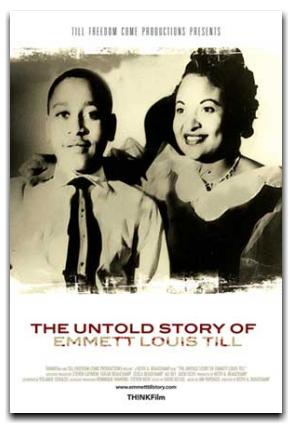
Untold Story of Emmett Louis Till Screening with Keith Beauchamp


WOW!!
I am speechless!
The movie was powerful enough
but the Q & A after was amazing!

I asked him about the Photos taken by the Sheriff as soon as they pulled the body from the river. And about his father's military death and accusation of rape.

He said they are still looking for the photos. And out of respect for his mother, Mrs. Mamie Till-Mobley, he withheld his finding on the murder of Till's father. But basically he was railroaded for dating a Captain's girlfriend and falsely accused of rape, and then hanged. This was used to try to discredit Mrs. Mamie Till-Mobley during the murder trial of her son....implying "Like Father Like Son!" Bogus!

He told me that Alice Kaplan wrote about this Black Soldier lynching phenomenon in her book the Interpreter: http://www.rusoffagency.com/non_fiction/the_interpreter/the_interpreter.htm

Interestingly enough Mr. Beauchamp added that Dwight Eisenhower oversaw the murder of Till's father, and ignored Mrs. Mamie Till-Mobley pleas to investigate the truth behind her son's murder!

For further information and to watch the theatrical trailers, visit this site: emmetttillstory.com

The event I attended was hosted by the Multicultural Student Programs and Services (MSPS) http://www.nd.edu/~msps/upcoming.htm


Keith A. Beauchamp has researched the Till case for over 8 years. During his monumental journey, he was able to work closely with the mother of Emmett Till, Mrs. Mamie Till-Mobley to finally get her son's tragic story told. By using his expertise, Mr. Beauchamp was fortunate to find and hold exclusive interviews with eye witnesses of the Till case that will change the face of his-story.

The Untold Story of Emmett Louis Till
In an event that contributed to the beginning of the civil rights movement, a black teenage boy in Mississippi was beaten and murdered for publicly addressing a white woman, and his killers were tried but released. The boy was Emmet Louis Till, whose story is told here in this documentary feature that, through eyewitness testimony and an interview with Till's mother, uncovers other potentially guilty parties, and helped cause the U.S. Justice Department to reopen the case.

Recent Press
CNN R. Alexander Acosta, assistant attorney general for the Civil Rights Division said Monday that officials will reopen the Emmett Till's race-motivated murder following a long campaign by the NAACP, members of Congress and Mobley, who died in Chicago last year at age 81. Keith A. Beauchamp, found evidence after examining the case for nine years for "The Untold Story of Emmett Louis Till." He believes as many as seven additional people may have been involved, many of them still alive.NEW YORK TIMES, Robin Finn... Keith A. Beauchamp, whose as yet unreleased documentary, "The Untold Story of Emmett Louis Till," was pivotal in the Justice Department's decision this month to reopen that landmark 1955 murder case, often left the house with a parental salvo ringing in his ears. "Don't let what happened to Emmett Till happen to you," his mother warned.

Audioclip of NPR Interview with Keith Beauchamp

Recent Press:

NEW YORK TIMES, Stephen Holden17 August 2005"The Untold Story of Emmett Louis Till," Keith A. Beauchamp's lean, harrowing inquisition into a murder that catalyzed the civil rights movement, is an incendiary documentary. Released to coincide with the 50th anniversary of his death, the 70-minute film has already made things happen.VILLAGE VOICE, Joshua Land16 August 2005No Justice, No Peace: Doc Reopens Old Wounds and a 1955 Case. A triumph of documentary activism nine years in the making, The Untold Story of Emmett Louis Till revisits Till's death and the trial and acquittal of the two men, Roy Bryant and J.W. Milam, who later confessed to the crime in a magazine interview (both have since died).

NEW YORK TIMES, Ellen Maguire...halfway through Keith A. Beauchamp's documentary "The Untold Story of Emmett Louis Till," the film cuts from Emmett's mother, Mamie Till Mobley, calmly describing her 14-year-old son's mutilation for whistling at a white woman — his head had been split side to side, and one eye left hanging from...CBS 60 Minutes Profile(CBS) For many, the name Emmett Till may not sound familiar, but what happened to him in 1955 stunned the nation, causing shock waves that still reverberate today.

Correspondent Ed Bradley reports.CHICAGO TRIBUNE, Robert K. ElderBeauchamp must be applauded for not only for his investigative daring but also his unflinching courage. At least one of his witnesses preferred to be interviewed in shadow, to protect her identity. After seeing Till's mashed features, bludgeoned so badly as not to be recognized as human, it's no wonder why. And all Emmett did was whistle.

VARIETY, Ronnie ScheibNine years in the making, Beauchamp's docu is the first-researched, second-released film on the subject. Stanley Nelson's "The Murder of Emmett Till" aired last year on PBS, following paths already blazed by Beauchamp.

TIME MAGAZINE Last week the Department of Justice announced it was going to crack open history and see if anything new crawled out. Assistant Attorney General, R. Alexander, described a joint project with the State of Mississippi to reopen the 1955 inquiry into the death of Emmett Till.

DETROIT FREE PRESS, Rochelle RileyBeauchamp began researching "The Untold Story of Emmett Louis Till" seven years ago, working with Emmett's mother, Mamie Till Mobley, until her death this year. It took three years for him to persuade Simeon Wright to talk. But Wright later introduced him to brothers John and Roosevelt Crawford. The latter, who recently retired from General Motors in Detroit, said it was about time. "It's been 47 years, and nobody ever tried to contact me or get in touch with me, not the NAACP, not the civil rights groups."

Tuesday, February 14

Is it Worth it?

Dear Diary,

Today my manager and I again discussed the reasons he created 20 different homework assignments for every single assignment, even though it dramatically increases the amount of time needed to grade each.

He insists he is doing his part to contribute to the environment of Academic Integrity. I consider it a "Lead them not into temptation..." approach.

I think back to the lectures on Millenials, that describes how this generation prefers a teamwork approach to learning. But he insists that it is important to disallow cheating on assignments. He insists "It is not fair to the other students who complete their homework assignments independently."

Today the Conservation Lab, hosted a Valentine's Day Open House complete with Catered Coffee and Smoothies. I made a journal. I watched paper get a bath. It was amazing!

Lastly, in my manager's class the computer system took nearly 5 minutes to load. So that drastically took away from in-class practice time. Luckily, I created "screen captures" of the entire process for today's in-class assignment. I figured since it was a complex database, the visual answers would help reinforce the concepts. And since some students did not have a chance to do the in-class practice, the answer sheet should help them.

Perfect timing, if I do say so myself! That reinforces my practice of having them log on at the beginning of class as opposed to waiting until I complete my lecture. I think it saves times.

Interesting thing I learned today:

Q. What is the chemical reason why water doesn’t “cool” your throat after eating hot sauce containing capsaicin?

A. After a review of the literature, it was determined that capsaicin is fat soluble. So if you eat hot sauce then consume something containing some Fat such as butter or whole milk.

Friday, February 10

Instructor, Writer, Librarian...Extraordinaire!!!

Dear Diary,

I just received notice that my article
Weary Helper:
From Private Investigator
to Librarian

has been published online
at LIScareer.com

available at http://liscareer.com/smith_pi.htm.

Thursday, February 9

A Stroke of Genius

Dear Diary,

I noticed that my manager has a nice cover sheet attached to his graded assignments. He has a typed label with their name on it on a colored sheet of paper. Well since I am still trying to find supplies, I dare not use the limited stock I see in my library so instead, I decided to create a unique cover sheet that served multiple purposes. Bonus: my printer ran out of toner and I was forced to go upstairs and use the Color Printer.

But I digress. Since my manager and I agree that the 30 - 40 minute in-class worksheets are a preferable approach to database instruction, good old fashioned hands-on, we have foregone using all the active learning exercises I toiled over for the better part of the beginning of this year.

So as a way to still use my labors of love, I decided I'd put the students' names on them and use those "fun" activities as my Cover Sheets when returning assignments. The students won't have to do them, unless they want to. But at least they will have received them. I plan to ask for feedback on them at the end of the semester, all the same.

For example, today's cover sheet is a Bare Bones Tips Sheet for Web of Science, including Truncation, Synonyms, and Booleans search tips. Lots of white space but lots of information also. On the back, is a greatly reduced Word Find. Only 2 names to locate in the paper grid, and I listed 4 different names & possible Variations underneath. I listed the number of results the different variations retrieved in Web of Science. This activity originally required them to type in the variations I provided and record the different number of results returned.

So this way, they can clearly see how different spellings of the same name will retrieve very different results in Web of Science. They have the tip sheet that should assist with tonight's assignment and I have not wasted weeks creating these activities that no one would ever see.

It is a Win-Win situation. Gosh, I sure am glad I thought of it.

******************** On a different note******************

Today is another day to wear our "Gay? Fine By Me" T-Shirts.

It was a little scary wearing it the first time, but it was fine. Now that I am an instructor, it is yet again causing a bit of trepidation. But I suppose it is fitting seeing that Coretta Scott King's funeral was this week and as Dr. Martin Luthar King said:

"A threat to freedom Anywhere
is a threat to freedom Everywhere."

Tuesday, February 7

1 Potato...2 Potatoes...3...Potatoes...4

Dear Diary,

I have started trying to quantify my "busy - ness" so I can try to streamline some procedures that are time-consuming.

I realize now that today for example, I have:

Attended a weekly Reference Meeting.

Corresponded with students who have questions on Assignment #1, that I returned to them last week.

Graded Assignment #2, that I need to return this week.

Corresponded with students who have questions on Assignment #3, that is due this week.

Collaborated with my manager on this week's lecture, in-class exercises and Assignment #4, that I will hand out this week. Made photocopies for this weeks handouts.

I should add that part of my preparation for each week's class, I have to complete the upcoming assignments and in-class exercises to notify my manager if he need to make any chages.

I still need to write the grade sheets with comments and attach answer sheets with correct citations to each assignment.

Then I need to add the grades to my grade book. Tick...Tock...Tick...Tock.


***BONUS:
I received a copy of Christian Librarian with my article published:
Spiritual Literacy: A New Concept for a New Reality.
Yippee!!

Monday, February 6

Job Security for Librarians!

Dear Diary,

My manager showed me this timely N.Y. Times article aptly titled:

Pity the Scientist Who Discovers the Discovered
By GINA KOLATA

IN 1996, Rakesh Vohra, a professor at Northwestern University, and his colleague Dean Foster published "A Randomized Rule for Selecting Forecasts," a paper in the journal Operations Research. It illustrated how a random investor could outperform a group of professional stock pickers simply by following a "buy and hold" investment strategy.

It was important research, the authors believed, until they learned that the same discovery had been made at least 16 times since the 1950's. And no one, Dr. Vohra said, ever realized they were not doing original work.

The discovery that your discovery has already been discovered is surprisingly common, said Stephen Stigler, a statistician at the University of Chicago who has written about the phenomenon. Not only does it occur in every scientific field, he said, the "very fact of multiple discoveries has been discovered many times."

The result of duplicative research may be no more serious than chagrin over wasted time. But in other cases, say those involving medical research, there can be a real risk of harm to patients.

It may seem odd that scientists in the Internet age spend years on a line of research, even bet their careers on it, without having first determined that their mountain had not already been climbed. But Dr. Stigler said that scientists often are ignorant of the work being done by others in their field, and searches of scientific literature can be hard to conduct. Web search engines, for example, look for words, not ideas, and Dr. Vohra said he discovered that every researcher who had made his discovery had given it a different name and description.

Of course, it can be embarrassing to learn that your discovery isn't one. But the best defense may be a good offense.

For example, there is the oft-told story about Larry Shepp, a famous mathematician at Rutgers University. Dr. Shepp, when told that a piece of work he thought was his discovery actually duplicated another mathematician's breakthrough, replied: "Yes, but when I discovered it, it stayed discovered."

For complete article http://www.nytimes.com/2006/02/05/weekinreview/05kolata.html

Friday, February 3

Just Keep Going & Going & ...

Dear Diary,

I am waiting to hear from my manager as to whether he will need to begin working part-time, and that will directly impact my workload. I know that he will be out during the month of April, but he just learned of this possibility last night. We will see.

I am still grading papers. I read through all papers once and simply credit the students with 1) On - time submission and 2) all answers present (including accompanying printouts / photocpoies, etc...)

Next I create a new grade sheet, weekly so I can make comments and return their grade with their assignments. Each assignment is different and so is my grade sheet. I do this on paper first and once the format is finalized then I create the electronic sheets.

I received an email from a fellow resident requesting feedback on my experience so far. I had not thought about the specific questions asked and so when I answered them I figured this would be a good thing to add here:

Challenges :

I have basically been getting acclimated to the hierarchy and the "acceptable" manner to move ideas forward. Careful of stepping on those toes!

I have to balance my desire to be involved in every possible endeavor, but not over-commiting myself and stretching myself too thin.

I want to knock their socks off without knocking myself out!

Goals
I'd like to gain experience in a variety of settings, in my case, Law and Chemistry BRANCH libraries as well as different departments in the Main Library such as Collection Development and projects with the African-American Subject librarian.

Also I'd like to positively convey the benefits of being a professional librarian to the High School students working in the library over the summer.

Thursday, February 2

Teacher Becomes the Student

Dear Diary,

We live...we learn...and sometimes we learn as we go. That is the case with me and my first "for-credit" class. I have improved my system of organizing correspondence with my students. Today was the first day they got back graded assignments and so far only 1 person has brought to my attention, an oversight on my part.

The student emailed me and I responded in the affirmative about not having to cite call numbers for electronic journals if there is none given, which was also the information the reference librarian had provided. Well, in the midst of grading papers, I relied on the answer sheet from previous classes which provided call numbers. So I, in my auto-pilot mode simply deducted points for all those without call numbers. Luckily the student was kind enough to inquire and re-send my original email. I immediately corrected the grade and forwarded it with my most heartfelt apologies.

I also decided to print all the email correspondence with students regarding today's assignment and have attached the email "replies" to the student's assignments. This will remind me of discussions / decisions I've made. Because I see now interacting with 21 students can leave room for error or inconsistencies. And I plan to avoid any more such careless errors. I plan to implement this procedure for all future assignments.

Even though I am not perfect, as much as I hate to admit that, I am thoroughly enjoying my class. My manager commented on how much more livelier my class is than his session. My group is regularly laughing and talking to each other during the group work time. And today while doing an in-class worksheet to learn SciFinder Scholar which uses prepositions as opposed to boolean operators, and, or, not...I had 2 different students tell me about the Preposition Song they learned in high school. So I found the following that they confirmed was the song. They said it is sang to the rhythm of Jingle Bells.


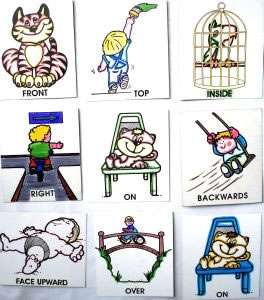
Preposition Song

A preposition (clap clap)
is a word (clap clap)
used to show (clap clap)
the relationship (clap clap)
of a noun (clap clap)
or a pronoun (clap clap)
to some other word (clap clap)
in the sentence (clap clap)

(Set to the tune of Jingle Bells)

aboard
about
above
across
after
against
along
among
around
at
before
behind
below
beneath
beside
besides
between
beyond
by
concerning
down
during
except
for
from
in
inside
ohhhhhhh….
into
like
near
of
off
on
out
over
pass
since
through
throughout
till
to
toward
under
underneath
unto
up
upon
with
within
without
that is the end of our preposition song.

Wednesday, February 1

Dear Diary,

Leslie and I are presenting at her alma mater, Wayne State on April 28th dealing with Writing & Publishing in Academia, in the Community, and the World. We will present on ChapBooks specifically how to write a grant for such a topic. Should be interesting. http://www.iupui.edu/~engwft/chapbooks.htm

Tuesday, January 31

Library Cafes

Dear Diary,

There are highly creative approaches to making libraries more customer-friendly. Some include the way that libraries are adapting to what I call the “Borders Bookstore Effect.”

Libraries are creating “Library Cafes,” as a way to adapt to the new cultural preferences of consumers, patrons and users.

Libraries are realizing that change is vital to ensure survival and maintain relevancy in today’s society. It benefits libraries tremendously to employ different strategies as they bravely forge ahead into the uncertain future.

For more information see: http://www.librarysupportstaff.com/coffeelibs.html

Monday, January 30

How Many Hours in a Day?

Dear Diary,

I graded my first set of assignments over the weekend, it took easily 7 hours.

Today I am preparing for my next class. I also finally was able to edit the IDR website using Macromedai Contribute.

I will need to attend a meeting sooner or later for the IDT team, but realistically I am wondering how much longer I will be able to work on the IDR team. Especially since I am working on the Diversity committee for the Summer High School Program.

Perhaps, I will make a decision this week as to just how thin I can realistically stretch myself. I just cannot possibly imagine teaching more than the one session that I have. I was originally scheduled to teach 2 classes. Yikes!

The way I figure it a typically week for me this quarter will go something like:

Mondays
Mornings = Weekly meeting to prepare for class with my manager usually until afternoon
Afternoons = Grade Papers

Tuesdays
Mornings = Grade Papers
Afternoons = Class and review success make needed adjustments for my class Thursday

Wednesdays
Mornings = Prepare for class, print out handouts and review lecture
Afternoons = Office Hours

Thursdays
Mornings = Finalize class prep
Afternoons = Class and Office Hours

Fridays
Mornings = Diversity Committee Meetings (bi-weekly) & Grade Papers
Afternoons = Practice next week's homework, make necessary adjustments

Naturally in the mean time and in-between time, there are student questions as well, usually on the weekends. So I make time each weekend to answer those.

Thursday, January 26

Road Less Travelled

Dear Diary,

I taught my second class today. My manager commented that my students love me, but mainly because I wrapped up early and dismissed them. Although, we did have a really interesting class. The students gave very encouraging feedback on the worksheet they had. Some comments included:

"We have never used Google to do conversions and calculations. WOW!"

"How can we use our ned defintion retrieved from Google in a regular conversation? "
They were asked to define "Defenestration" which is "the act of throwing someone or something out of a window." That will definitely start a lively conversation at a cocktail party.

But I think the classic line that forced me to say, "Well I can't top that, so class is dismissed" was during the evaluating website portion, they were asked to evaluate a website about the Bird Flu Conspiracy. The student replied, well the author is sorta qualified to speak on the subject b/c he is a Quack. The room burst into laughter and that was a great end to a great class.

I spoke with my managers about attending the Tanzania Library Association Conference since the discuss University and Academic libraries in Africa, I would like to compare and contrast them to ours. Coincidentally I was asked to contribute a piece to an International Newsletter for the American Library Association, today as well. So I offered to write a perspective about the African Conference and that idea was well received.

Although I received mixed feedback from some people, as to the professional value such a conference would have on my career, I feel so strongly about it that I plan to go on my vacation time with my personal funds. http://www.tlatz.org/scecsal2006/scanulecs.html

I have scheduled my next 2 speaking engagements in concert with my co-Resident. The first one will be in Indianapolis and the second one will be in Detroit.

Sunday, January 22

Professor Smith I Presume

Dear Diary,

I am just tickled pink with every email addressed to Professor Smith from my students in my Chem 23202 class. I was pleased at how the 1st week went. The only feedback from my manager was that I favor the right side of the room. I think I looked both ways, but will accept all feedback and make sure I am doing the best I can.

I am in charge of my class and while I plan to keep the two session similar, I have carte blanche with my class. I explained to my manager I personally am more concerned with imparting knowledge to the students as opposed to deducting points for minor mistakes or things that are clearly typos, etc...But I have to balance that desire with ensuring the student's being motivated to strive their best. I ascribe to the Montessori Model Ideals, personally, but again ..."When in Rome...or Notre Dame."


Education is the kindling of a flame, not the filling of a vessel.
- Socrates

I never teach my pupils;
I only attempt to provide the conditions in which they can learn.
- Einstein

Tuesday, January 10

Matching Game

Dear Diary,

I have finished all active learning activities. The last one was a simple Matching Game to identify appropriate databases. Phew! Now I have begun creating cheat sheets for each database.

Tomorrow I will begin reviewing the first few assignments and lecture materials.

Saturday, January 7

On a Roll...I'm So Good I Shock Myself!


Dear Diary,

Yes it is Saturday.

And yes I have been at work for going on 9 hours!

I was determined to complete these Active Learning activities, prior to Monday. So next week I can focus on re-acquaintaing myself with the Chemistry material I was introduced to over the last 6 months. To say it was difficult to absorb completely while working in the law library , would be an understatement. So now that I can focus all of my attention on Chemistry, I don't want to be distracted by thoughts of upcoming activities that need to be planned. And viola.

Today I came up with the following concepts and completed the missing week activities. We plan to repeat some, purposefully. At the end of the semester we will survey the students and see which activities were most well received / helpful.

*Copyright Tic Tac Toe

*Google Crossword Puzzle

*Web of Science
(Scavenger Hunt with Word Find)

*PATENT-ly RID-iculous
(Patents' Scavenger Hunt using Riddles and Word Jumbles)

*Lecture Lingo
(My take on Bingo) instead of listening for B-8 or I-61, they listen for terms

Friday, January 6

I Think I Can...I Think I Can...


Dear Diary,

I gained access to Contribute, after creating a sample website for the Institutional Digital Repository. I came up with a cutsy title for our project: ND's I.D.

It is a play on words. I used ID as an abbreviation for Institutional Depository, (I've have seen these projects referred to both ways).

But also because the content is a way to "identify" Notre Dame's scholars. Get it?

I found volunteers to do my Active Learning exercises, so I can time them and make any adjustments.

Speaking of "possibilities," I am working on an active learning activity for Patents. And have been researching some of the more interesting ones, yes of course the Bird Diaper. But also

"Form Fitting" invented by: Rikiya Fukuda, A door that fits like a glove!

Fukuda's Automatic Door, designed in Japan, opens just enough to match the shape of the person or object passing through. The nifty motion-detecting portal saves energy by keeping a door from having to repeatedly open all the way. That helps maintain a stable temperature in a room and can prevent dirt and other materials from being swept inside. In addition to people, the new system can be used for small objects, like packages dropped off at a post office, or for larger things, like a car coming through a garage door.

Thursday, January 5

Who Knew Learning Could Be So Much Fun

Dear Diary,

Today I am hard at work on finalizing all of my Active Learning exercises for my upcoming Chemistry Databases class. To that end, I have created an exercise for 8 of the 9 classes we have.

Although created for younger audiences, this website as an interactive educational tool to identify copyright issues and learn how and why copyright law applies to everyone.
http://www.copyrightkids.org/quizframes.htm

I have also developed 3 different Scavenger Hunts for Web of Science, NCBI and Patents. Two begin with Word Find puzzles and the other one begins with a "Riddle me this..." Pretty clever if I do say so myself.

Instead of Wheel of Fortune/Jeopardy exercise I have designed a Lecture Bingo, for 2 of the more complex lectures. I chose Lecture Bingo to ascertain who is paying attention and as a way to break up the monotony.

I have created a Google Keyword Crossword Puzzle to reinforce advanced searching options such as the use of a tilde sign (~) immediately in front of your search term for synonyms.

Another exercise reminds the students that Boolean Operator "OR" must be uppercase between search terms.

*I include some interesting asides from their website, such as:

What does "Google" mean?

The name "Google" is a play on the word "googol," which was coined byMilton Sirotta, nephew of American mathematician Edward Kasner. Agoogol refers to the number represented by a 1 followed by 100 zeros. Agoogol is a very large number. There isn't a googol of anything in theuniverse -- not stars, not dust particles, not atoms. Google's use ofthe term reflects our mission to organize the world's immense (and seemingly infinite) amount of information and make it universallyaccessible and useful.

http://www.google.com/intl/xx-elmer/
Searching Ewmew Fudd still retrieves same results as regular Google!

http://www.alltooflat.com/geeky/elgoog/m/index.cgi
Searching elgooG also still retrieves same results, but with a slight Headache!

You can Vanity Google yourself, one of my favorite past times. But I didn't know that Google had an opinion about me one way or the other, until I discovered this.
http://www.googlism.com/index.htm

Google never ceases to amaze me. You can search Patent Numbers, such as:
Patent 5934226 (Bird Diapers)

There is a Handy Dandy Calculator Feature!
To use Google's built-in calculator function, simply enter the calculation you'd like done into the search box and hit the Enter key or click on the Google Search button. The calculator can solve math problems involving basic arithmetic, more complicated math, units of measure and conversions, and physical constants. Try one of the sample expressions below:

These sample queries demonstrate the utility and power of this feature:
5+2*2
2^20
sqrt(-4)
half a cup in teaspoons
160 pounds * 4000 feet in Calories

Naturally if you want to see who links to a specific website you can simply type in:
link:www.nd.edu

And lastly you can get definitions by typing:
define:umlaut

Wednesday, January 4

More Than You Ever Wanted to Know About Genes

Dear Diary,

Today I had training on the National Center for Biotechnology Information (NCBI) suite of databases, with particular focus on Nucleotides, Proteins, Structure and Online Mendelian Inheritance in Man (OMIM).

We decided to forego the Wheel of Fortune / Jeopardy active learning exercies due to time constraints. I am finalizing the Scavenger Hunt.

Tuesday, January 3

Active Learning

Dear Diary,

Today I began working on Active Learning exercises for Chemistry Databases.

I completed a word find as a precursor to the Scavenger Hunt in Web of Science. 1 down, 6 more to go.

I created a Wheel of Fortune meets Jeopardy exercise to reinforce Boolean Searching, also.

Wednesday, December 21

Judge Condemns Intelligent Design as "Breathtaking Inanity"

Dear Diary,

Judge Says 'Intelligent Design' Is Not Science


He calls a school board's effort to teach it as an alternative to evolution unconstitutional.

A federal judge, saying "intelligent design" is "an interesting theological argument, but … not science," ruled Tuesday that a school board violated the Constitution by compelling biology teachers to present the concept as an alternative to evolution.

The ruling came after U.S. District Judge John E. Jones III heard 21 days of testimony in a closely watched trial that pitted a group of parents against the school board in the town of Dover, Pa. In October 2004, the board had required school officials to read a statement to ninth-graders declaring that Charles Darwin's ideas on evolution were "a theory … not a fact," and that "gaps in the theory exist for which there is no evidence."

"Intelligent design is an explanation of the origin of life that differs from Darwin's view," the statement said.

Jones, a church-going conservative who was appointed to the federal bench by President Bush in 2002, said the statement was clearly designed to insert religious teachings into the classroom. He used much of his 139-page ruling to dissect arguments made for intelligent design.

Legal experts described the ruling as a sharp defeat for the intelligent design movement — one likely to have considerable influence with other judges, although it is only legally binding in one area of Pennsylvania.

The "overwhelming evidence" has established that intelligent design "is a religious view, a mere relabeling of creationism, and not a scientific theory," Jones wrote. Public remarks by school board members, he said, made clear that they adopted the statement to advance specific religious views. Testimony at the trial included remarks from a board meeting, where one of the backers of the intelligent design statement "said words to the effect of '2,000 years ago someone died on a cross. Can't someone take a stand for him?' " the judge noted.

Supporters of intelligent design argue that biological systems are so complex that they could not have arisen by a series of random changes. The complexity of life implies an intelligent designer, they say. Most of the movement's spokesmen take care not to publicly say whether the designer they have in mind is equivalent to the God in the Bible. On that basis, they argue that their concept is scientific, not religious.

But Jones said the concept was inescapably religious."Although proponents of the [intelligent design movement] occasionally suggest that the designer could be a space alien or a time-traveling cell biologist, no serious alternative to God as the designer has been proposed by members" of the movement, including expert witnesses who testified, Jones wrote.

Remarks by board members that they had secular purposes in mind — to improve science teaching and to foster an open debate — were a "sham" and a "pretext for the board's real purpose, which was to promote religion in the public school classroom," he wrote.

Anticipating attacks, Jones said his ruling was not the "product of an activist judge."He said school board officials had lied in their testimony and excoriated them for not bothering to understand what intelligent design was about before making their decision.


He rebuked what he called the "breathtaking inanity of the board's decision."

"This case came to us as the result of the activism of an ill-informed faction on a school board, aided by a national public interest law firm eager to find a constitutional test case" on intelligent design, he wrote.

The school district will not appeal the ruling, said Patricia Dapp, who was elected to the Dover board this year. The supporters of intelligent design have been voted out of office, and eight members of the board now oppose the concept, she said. The Dover trial, in which Jones heard testimony from leading advocates of intelligent design as well as experts on evolutionary theory, was one of several battlegrounds for intelligent design in the last year.

In January, a U.S. district judge in Georgia ruled that the school system in Cobb County, near Atlanta, had violated the Constitution by requiring stickers to be placed on biology textbooks casting doubt on the theory of evolution.This month, a federal appeals court in Atlanta considered arguments in the case, with at least one judge expressing doubts about the lower court ruling.

In Kansas, the state Board of Education has changed the definition of science to permit supernatural explanations.That reliance on the supernatural was key to Jones' rejection of the Dover school board's position.Intelligent design arguments "may be true, a proposition on which this court takes no position," he wrote, but it "is not science." "The centuries-old ground rules of science" make clear that a scientific theory must rely solely on natural explanations that can be tested, he wrote. That portion of the decision won praise from Kenneth R. Miller, a biology professor at Brown University in Providence, R.I. He was the lead expert witness for the parents in the case and is the author of biology textbooks used in college and high school classrooms. Miller testified that it was crucial that scientific propositions be able to be tested. To illustrate his point, Miller, an avid fan of the Boston Red Sox, testified that when his team beat the New York Yankees in the 2004 baseball playoffs, a fan might have believed "God was tired of [Yankee owner] George Steinbrenner and wanted to see the Red Sox win." "In my part of the country, you'd be surprised how many people think that's a perfectly reasonable explanation for what happened last year. And you know what? It might be true. But it certainly is not science … and it's certainly not something we can test," Miller said.

Supporters of intelligent design denounced Jones' ruling along the lines the judge had predicted."The Dover decision is an attempt by an activist federal judge to stop the spread of a scientific idea … and it won't work," said John West, associate director of the Center for Science and Culture at the Discovery Institute. The institute, based in Seattle, is a major backer of the intelligent design movement."Anyone who thinks a court ruling is going to kill off interest in intelligent design is living in another world," West said.Richard Thompson of the Thomas More Law Center, the lead lawyer for the school board members, called the ruling an "ad hominem attack on scientists who happen to believe in God.""The founders of this country would be astonished at the thought that this simple curriculum change [was] in violation of the Constitution that they drafted," he said.

But Lee Strang, a constitutional law professor at Ave Maria School of Law in Ann Arbor, Mich., which advocates a greater role for religion in public life, said that given Supreme Court precedents and the evidence that Dover school board members had religious goals in mind, Jones' ruling was inevitable.The Supreme Court in 1987 barred the teaching in public schools of what backers called creation science. The concept of intelligent design emerged after that ruling, Jones noted in his ruling.

Douglas Laycock of the University of Texas School of Law said the ruling would probably have considerable influence because it came after a trial in which "both sides brought in their top guns" to testify. The judge's detailed ruling "will be quite persuasive to other judges and lawyers thinking about provoking a similar case elsewhere," he said.

Marci Hamilton, a professor at Cardozo School of Law in New York, who is an expert on religious freedom issues, agreed that the ruling could have broad ramifications."These are tough times to rule against a religious group," Hamilton said. "This decision sends a message to judges that it is not anti-religious to find things like intelligent design unconstitutional."

Eric Rothschild, one of the plaintiffs' lawyers, called the ruling "a real vindication of the courage [the parents] showed and the position they took."The testimony, he said, had demonstrated that "the emperor had no clothes. The judge concluded that intelligent design had no scientific merit" and could not "uncouple itself from religion."

Monday, December 19

Dear Diary,

Who knew?

There is a Santa Claus, Indiana!

Santa Claus is located just 7 miles south of Interstate 64 in Southern Indiana.

According to legend, this small community, originally founded by German immigrants in the late 1840s, got its name on Christmas Eve in 1852. The local residents and leaders had been struggling quite some time to come up with an acceptable name for their town. Most of the community was present for the last town meeting of the year, held right after Christmas Eve services in the local church. They were hoping to finally determine a name for their town, when suddenly the wind blew the church doors open and mysterious sleigh bells were heard outside. The children yelled excitedly, “It’s Santa Claus!” At last! They finally had the perfect name for the town.

In the 1940's, Industrialist Louis J. Koch, built the World’s first theme park in the town of Santa Claus. Koch loved holidays and wanted children who visited the town to be able to see that this was truly Santa's home. The theme park, originally named Santa Claus Land, has experienced tremendous growth over the years and is well-known today as Holiday World & Splashin’ Safari.
Santa Claus is the only town in the world with the Santa Claus name that has a post office. You will find quite a few other Christmas-themed business and street names throughout the town - everything from Christmas Lake Village and Kringle Place to Santa’s Lodge, Holiday Foods and Ho Ho Ho Video. Each year, this small town hosts an old-fashioned Christmas in Santa Claus celebration and a 14-mile Festival of Lights.
http://www.traveleze.com/travel_planning/santaclaus.html

Thursday, December 15

Torture is Morally Necessary?


Dear Diary,
according to some IT is.

"The Truth about Torture It's time to be honest about doing terrible things. "
by Charles Krauthammer 12/05/2005

DURING THE LAST FEW WEEKS in Washington the pieties about torture have lain so thick in the air that it has been impossible to have a reasoned discussion. The McCain amendment that would ban "cruel, inhuman, or degrading" treatment of any prisoner by any agent of the United States sailed through the Senate by a vote of 90-9. The Washington establishment remains stunned that nine such retrograde, morally inert persons--let alone senators--could be found in this noble capital.

Now, John McCain has great moral authority on this issue, having heroically borne torture at the hands of the North Vietnamese. McCain has made fine arguments in defense of his position. And McCain is acting out of the deep and honorable conviction that what he is proposing is not only right but is in the best interest of the United States. His position deserves respect. But that does not mean, as seems to be the assumption in Washington today, that a critical analysis of his "no torture, ever" policy is beyond the pale.

Let's begin with a few analytic distinctions. For the purpose of torture and prisoner maltreatment, there are three kinds of war prisoners:

First, there is the ordinary soldier caught on the field of battle. There is no question that he is entitled to humane treatment. Indeed, we have no right to disturb a hair on his head. His detention has but a single purpose: to keep him hors de combat. The proof of that proposition is that if there were a better way to keep him off the battlefield that did not require his detention, we would let him go. Indeed, during one year of the Civil War, the two sides did try an alternative. They mutually "paroled" captured enemy soldiers, i.e., released them to return home on the pledge that they would not take up arms again. (The experiment failed for a foreseeable reason: cheating. Grant found that some paroled Confederates had reenlisted.)

Because the only purpose of detention in these circumstances is to prevent the prisoner from becoming a combatant again, he is entitled to all the protections and dignity of an ordinary domestic prisoner--indeed, more privileges, because, unlike the domestic prisoner, he has committed no crime. He merely had the misfortune to enlist on the other side of a legitimate war. He is therefore entitled to many of the privileges enjoyed by an ordinary citizen--the right to send correspondence, to engage in athletic activity and intellectual pursuits, to receive allowances from relatives--except, of course, for the freedom to leave the prison.

Second, there is the captured terrorist. A terrorist is by profession, indeed by definition, an unlawful combatant: He lives outside the laws of war because he does not wear a uniform, he hides among civilians, and he deliberately targets innocents. He is entitled to no protections whatsoever. People seem to think that the postwar Geneva Conventions were written only to protect detainees. In fact, their deeper purpose was to provide a deterrent to the kind of barbaric treatment of civilians that had become so horribly apparent during the first half of the 20th century, and in particular, during the Second World War. The idea was to deter the abuse of civilians by promising combatants who treated noncombatants well that they themselves would be treated according to a code of dignity if captured--and, crucially, that they would be denied the protections of that code if they broke the laws of war and abused civilians themselves.

Breaking the laws of war and abusing civilians are what, to understate the matter vastly, terrorists do for a living. They are entitled, therefore, to nothing. Anyone who blows up a car bomb in a market deserves to spend the rest of his life roasting on a spit over an open fire. But we don't do that because we do not descend to the level of our enemy. We don't do that because, unlike him, we are civilized. Even though terrorists are entitled to no humane treatment, we give it to them because it is in our nature as a moral and humane people. And when on rare occasions we fail to do that, as has occurred in several of the fronts of the war on terror, we are duly disgraced.

The norm, however, is how the majority of prisoners at Guantanamo have been treated. We give them three meals a day, superior medical care, and provision to pray five times a day. Our scrupulousness extends even to providing them with their own Korans, which is the only reason alleged abuses of the Koran at Guantanamo ever became an issue. That we should have provided those who kill innocents in the name of Islam with precisely the document that inspires their barbarism is a sign of the absurd lengths to which we often go in extending undeserved humanity to terrorist prisoners.

Third, there is the terrorist with information. Here the issue of torture gets complicated and the easy pieties don't so easily apply. Let's take the textbook case. Ethics 101: A terrorist has planted a nuclear bomb in New York City. It will go off in one hour. A million people will die. You capture the terrorist. He knows where it is. He's not talking.
Question: If you have the slightest belief that hanging this man by his thumbs will get you the information to save a million people, are you permitted to do it?
Now, on most issues regarding torture, I confess tentativeness and uncertainty. But on this issue, there can be no uncertainty: Not only is it permissible to hang this miscreant by his thumbs. It is a moral duty.

Yes, you say, but that's an extreme and very hypothetical case. Well, not as hypothetical as you think. Sure, the (nuclear) scale is hypothetical, but in the age of the car-and suicide-bomber, terrorists are often captured who have just set a car bomb to go off or sent a suicide bomber out to a coffee shop, and you only have minutes to find out where the attack is to take place. This "hypothetical" is common enough that the Israelis have a term for precisely that situation: the ticking time bomb problem.

And even if the example I gave were entirely hypothetical, the conclusion--yes, in this case even torture is permissible--is telling because it establishes the principle: Torture is not always impermissible. However rare the cases, there are circumstances in which, by any rational moral calculus, torture not only would be permissible but would be required (to acquire life-saving information). And once you've established the principle, to paraphrase George Bernard Shaw, all that's left to haggle about is the price. In the case of torture, that means that the argument is not whether torture is ever permissible, but when--i.e., under what obviously stringent circumstances: how big, how imminent, how preventable the ticking time bomb.

That is why the McCain amendment, which by mandating "torture never" refuses even to recognize the legitimacy of any moral calculus, cannot be right. There must be exceptions. The real argument should be over what constitutes a legitimate exception. Click here for the remainder of this article http://www.weeklystandard.com/Content/Public/Articles/000/000/006/400rhqav.asp
*
*
Amnesty seeks UK probe into CIA flights
http://english.aljazeera.net/NR/exeres/F70C4486-A501-4F69-9695-59F92AEB8226.htm
Amnesty International says Britain allowed the CIA to operate flights on its territory to transport terrorism detainees illegally and demanded that the government launch an investigation.

"The UK has allowed these aircraft to land, re-fuel and take off from their territory," the human rights group's regional director Claudio Cordone said in a statement on Thursday.

"The UK government must launch an immediate, thorough and independent investigation into mounting evidence that its territory has been used to assist in unlawfully transporting detainees to countries where they may face "disappearance", torture or other ill-treatment," he added.
The British government said on Monday it had no evidence that the current US administration had been transporting terrorism suspects through British airports.

Cordone said: "Whether the US is sending people to other countries to be tortured, or snatching them in other countries to be abused in Guantanamo, international law prohibits the UK, or any other state, from aiding or abetting them."

CIA prisons
Human rights groups accuse the CIA of running secret prisons in eastern Europe and covertly transporting detainees -a practice known as "extraordinary rendition". They say incommunicado detention often leads to torture.

"The UK government must launch an immediate investigation into mounting evidence that its territory has been used to assist in unlawfully transporting detainees"Amnesty International statementThe Amnesty statement named several men it said had been abducted by the CIA and flown to Jordan and Egypt as part of the US campaign of "extraordinary rendition".

In each case a Gulfstream V, registration N379P, had stopped to refuel at Prestwick airport in Scotland on its way back to the United States after dropping off its passengers, it said. It cited the case of Jamil Qasim Saeed Mohammed who it said was seen being bundled aboard the CIA plane by masked men in Karachi on 23 October, 2001. The plane then flew to Jordan and the following day, now without its passenger, it flew to Prestwick and then on to Dulles International airport near Washington.

Amnesty demanded that the United States reveal Mohammed's whereabouts. UK stop-overAmnesty said that on 12 January, 2002, Indonesian security officials saw Muhammad Saad Iqbal Madni being put on the plane in Jakarta and flown to Cairo. Once again the plane stopped in Prestwick to refuel after depositing its passenger.

It said Iqbal Madni had since been returned to US jurisdiction and was now a detainee in Guantanamo Bay where fellow detainees had said he was on the verge of a breakdown.
Amnesty cited a third case where a Swedish investigation has already revealed that US security officials took Ahmed Agiza and Mohammed al-Zari from Sweden to Cairo for torture.
In total, Gulfstream N379P had been logged between 2001 and 2005 making at least 78 stopovers at British airports while en route to or from destinations such as Baku, Dubai, Cyprus, Karachi, Qatar, Riyadh, Tashkent, and Warsaw, Amnesty said.

Friday, December 9

Institutional Repository (IR) / Open Access Archives

Dear Diary,

I met with a few library faculty and other department faculty to give them a courtesy overview of our project.

The head of the IR committee and I met with the law school professor who specializes in Copyright. We learned a lot about exclusive rights to copy and distribute, difference in pre & post-1922 materials, and a few exceptions, such as photographs of pre-1922 works which would ordinarily be in the public domain.

We realized the amount of work involved in tracking down individual Copyright Agreements for contributing individuals. We understand better the focused, yet extensive audience that already exists for law faculty. Law faculty can be pre-published and track how many times their pre-prints have been viewed with SSRN. The law faculty specifically already has many of the conveniences we would offer with our IR. So at first glance it would appear that the benefits to contribute to our IR would be neglible. So we need to work to find a way to make it more appealing. I loved the explanation given: "Lawyers are cautious and risk adverse." Aren't we all?

So the next portion is to create a website for our IR project. I don't think we need to reinvent the wheel so these are some of the sample sites I plan to suggest we model our page after and/or link directly to:

FAQs:
https://drum.umd.edu/dspace/help/FAQs.jsp
http://www.ulib.iupui.edu/idea/faq.html
http://libweb.uoregon.edu/catdept/irg/SB_FAQ.html

Glossary:
http://library.osu.edu/events/cs/techseminar04/glossary/repos.html

Webliography & Sample Repositories:
http://www.bc.edu/libraries/about/scholcomm/s-repositories/#examples

RoMEO:
http://www.lboro.ac.uk/departments/ls/disresearch/romeo/index.html